Calgary winter weather can arrive quickly, and property owners and occupants have specific responsibilities after snowfall. Understanding the Calgary snow removal bylaw helps residents keep sidewalks accessible, avoid enforcement problems and know which areas are handled by the City.
Editor’s note: Municipal information was reviewed in September 2026. Always check the City of Calgary website for current requirements and active notices.
The 24-Hour Sidewalk-Clearing Rule
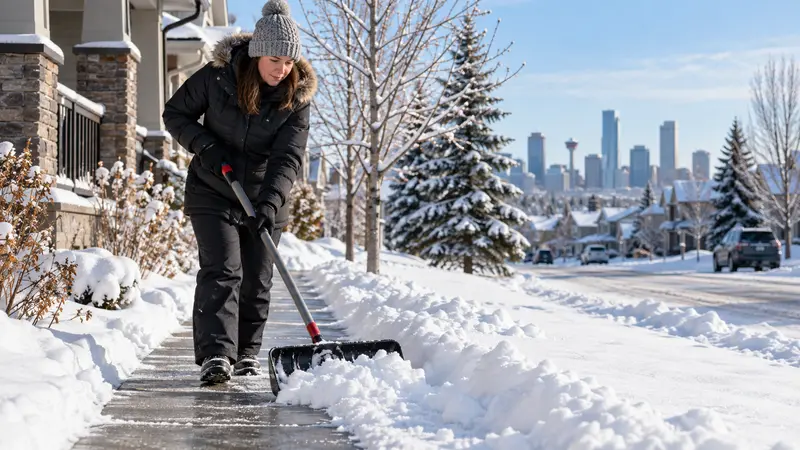
Under Calgary’s snow and ice requirements, owners and occupants must remove snow and ice from public sidewalks bordering their private property within 24 hours after snowfall ends. The surface should be cleared down to a bare condition as far as reasonably possible. The rule applies to residential and business properties, and an owner who lives elsewhere remains responsible for ensuring the work is completed.
The official City of Calgary snow and ice bylaw page should be treated as the primary source. It explains responsibilities for sidewalks and adjacent public pathways. Where a qualifying public pathway borders a property, a minimum width of 1.5 metres must be cleared within the same 24-hour period.
Who Clears Which Areas?
Sidewalk clearing is a shared responsibility. The City clears sidewalks bordering City-owned property, selected high-use locations, pedestrian overpasses, certain bus pads and LRT areas. Private owners and occupants clear most sidewalks adjacent to homes and businesses. The City’s snow services page links to current updates, maps, parking information and reporting tools.
Residential streets are not necessarily cleared to bare pavement. Calgary follows a priority system that focuses first on major routes and then on important community and transit roads. Residents should review the Priority Snow Plan to understand the sequence. Deerfoot Trail and Stoney Trail are maintained by the Province rather than the City.
Where Should Shovelled Snow Go?
Snow removed from a private driveway or property should remain on the property rather than being pushed onto a public road or blocking a sidewalk. When clearing an adjacent sidewalk, place snow where it will not create a visibility problem, obstruct drainage or block pedestrian access. Avoid building piles at crossings, curb ramps and fire hydrants.
Keep waste and recycling collection in mind. Do not create snowbanks that prevent carts from being placed correctly or accessed by collection crews. During an active snow-route parking ban, carts collected from the street should normally be placed on the sidewalk or boulevard next to the curb, with suitable clearance around them. Confirm current instructions before collection day.
Snow Routes and Parking Bans
A snow-route parking ban is separate from the sidewalk-clearing rule. When the City declares a ban, vehicles must be moved from designated snow routes. These routes generally include major roadways, collector roads and many bus routes. They are identified by blue signs bearing a white snowflake, although signs may appear mainly at route entry points.
Restrictions can remain in place for up to 72 hours and may end earlier when work is complete. Vehicles left on an affected route can be ticketed or towed. Drivers can check their address, review the route map and subscribe to alerts on the official snow-route parking-ban page. Do not assume parking is allowed simply because a plow has already passed; wait until the City officially lifts the ban.
What Happens When a Sidewalk Is Not Cleared?
Residents can report a sidewalk bordering private property when it remains uncleared beyond the required period. Reports can be made through Calgary 311 using the appropriate snow-on-sidewalk service request. City staff may inspect the location and apply the enforcement process described in current municipal rules.
If a sidewalk is difficult because of packed snow or recurring ice, address the cause where possible. Use appropriate tools, apply traction material responsibly and avoid products that could harm concrete, pets or landscaping. The City makes free sand-salt mixture available at selected locations; availability and pickup instructions should be checked before travelling.
Practical Snow-Clearing Tips
- Start before snow becomes packed by pedestrians.
- Use a shovel suited to the depth and weight of the snow.
- Push manageable amounts instead of lifting heavy loads.
- Take breaks and dress for changing Calgary conditions.
- Clear curb ramps and access points without placing snow in the road.
- Use traction material on persistent slippery areas.
- Arrange help in advance if you will be away or cannot shovel safely.
Neighbours can make a meaningful difference for older adults, people with disabilities and anyone temporarily unable to clear snow. Calgary’s Snow Angels initiative encourages residents to help keep community sidewalks accessible.
Frequently Asked Questions
How soon must a Calgary sidewalk be cleared?
Public sidewalks bordering private property must generally be cleared within 24 hours after snowfall ends. Check the official bylaw page for the latest wording and any updates.
Does the City clear residential sidewalks?
The City clears selected sidewalks and pathways associated with City property and priority infrastructure. Most sidewalks bordering private property are the responsibility of the adjacent owner or occupant.
Can driveway snow be pushed onto the street?
Snow from private property should not be deposited on the roadway. Keep it on the property and ensure piles do not block sidewalks, visibility, drainage or access.
How do I know whether my street is a snow route?
Use the City’s official address lookup and snow-route map. Blue snowflake signs mark routes, but signs may not appear in front of every property.
Can I park after the snowplow passes?
Not during an active parking ban. Snow-clearing equipment may return more than once, so wait until the City announces that the ban has ended.
Final Thoughts
The Calgary snow removal bylaw is designed to keep public routes safer and more accessible throughout winter. Clear adjacent sidewalks promptly, store snow responsibly and monitor official notices when major snowfall is expected. Using City of Calgary sources rather than social-media claims will help you follow the correct and most current requirements.
Preparing Before the First Major Snowfall
Before winter intensifies, inspect shovels, ice chippers and traction supplies, and decide where snow can be stored without blocking sightlines or access. Property managers and landlords should confirm who will complete the work and how coverage will be maintained during weekends, holidays or staff absences. Residents leaving Calgary should arrange for a neighbour or contractor rather than waiting until they return.
It is also useful to subscribe to official snow-route notifications and bookmark the road-conditions map. Keeping municipal alerts, a snow brush, emergency supplies and suitable footwear ready makes sudden storms easier to manage. If a storm creates an immediate safety hazard, use the appropriate 311 channel rather than assuming a social-media report has reached the City.